SNAP Command

SNAP Command

Restricts cursor movement to specified intervals. 

The following prompts are displayed: 

Snap Spacing
Activates Snap mode with the value you specify. 
On
Activates Snap mode using the current settings of the snap grid. 
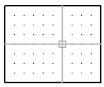
Off
Turns off Snap mode but retains the current settings. 
Aspect
Specifies different spacing in the X and Y directions. 
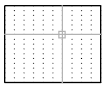
Legacy

Specifying Yes results in legacy behavior. The cursor snaps the snap grid at all times. 

Specifying No results in modern behavior. The cursor snaps the snap grid only when an operation is in progress. 
Style
Specifies the format of the snap grid, which is Standard or Isometric. 
Standard

Sets a rectangular snap grid that is paralleled to the XY plane of the current UCS. X and Y spacing may differ. 

Spacing
Specifies the overall spacing of the snap grid. 
Aspect
Specifies the horizontal and vertical spacing of the snap grid separately. 
Isometric
Sets an isometric snap grid, in which the snap locations are initially at 30-degree and 150-degree angles. Isometric snap cannot have different Aspect values. The lined grid does not follow the isometric snap grid. 
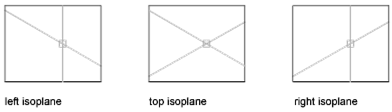
ISOPLANE determines whether the crosshairs lie in the top isometric plane (30- and 150-degree angles), the left isoplane (90- and 150-degree angles), or the right isoplane (30- and 90-degree angles). 
Type

Specifies the snap type, polar or rectangular. This setting is also controlled by the SNAPTYPE system variable. 

Polar
Sets the polar angle increment. (POLARANG system variable). 
Grid

Sets the snap to Grid. When you specify points, the cursor snaps along vertical or horizontal grid points. 

Powered by AutoCAD®


    • Related Articles

    • ISODRAFT Command

      Turns isometric drafting settings on or off, and specifies the current 2D isometric drafting plane.  The ISODRAFT command supersedes the ISOPLANE command. The primary advantage of ISODRAFT is that when it is turned on or off, all related settings are ...
    • EDGE Command

      Changes the visibility of 3D face edges.  This command only affects objects created using the 3DFACE command.  The following prompts are displayed.  Edge of 3D Face to Toggle Visibility  Controls the visibility of the edges you select.  If the edges ...
    • 3DFACE Command

      Creates a three-sided or four-sided surface in 3D space.  After entering the last two points for a 3D face, the command repeats automatically using the two points as the first two points of the next 3D face. For example:  The following prompts are ...
    • POLYGON Command

      Creates an equilateral closed polyline.  You specify the number of sides of the polygon and whether it is inscribed or circumscribed.  The following prompts are displayed:  Number of Sides Specifies the number of sides in the polygon (3-1024).  ...
    • LINE Command

      Create a series of contiguous line segments. Each segment is a line object that can be edited separately.  The following prompts are displayed:  Specify First Point Sets the starting point for the line. Click a point location. With object snaps or ...
    • Recent Articles

    • Microvellum Foundation Library Release Notes | Build 26.0527

      The following release notes apply to the Microvellum Foundation Library build 26.0527. Additions Added new features for the Wood Drawer Box to have reduced sides, sub front, or back. Added 3 new global and subassembly prompts: “Wood Drawer Side ...
    • Microvellum Release Notes | Build 26.1.0529.641

      The following release notes apply to Microvellum build 26.1.0529.641. BSB Docking Size Fix An issue was reported to be occurring in Microvellum BSB 2026: when adjusting the size of a docked Microvellum palette, users found that the palette would ...
    • Adding Custom Hinges and Mounting Plates (Foundation Library)

      Hinges and mounting plates are classified as hardware items within the Foundation library, and as such, the process for adding hinges and mounting plates does not differ greatly from other pieces of hardware, though with the variety of cabinet ...
    • Apply Render Materials

      The Apply Render Materials interface is a Microvellum function that allows one to assign specific render materials to database materials within one’s material library. Using this interface, one can efficiently control and visually align one’s ...
    • Microvellum Release Notes | Build 26.1.0520.641

      The following release notes apply to Microvellum build 26.1.0520.641. Assign Render Material A new option has been added to the Library Specification Groups interface: Assign Render Material. This new interface displays the Microvellum material ...