Configuration Editor: Utilities Options
Database Management
See the article Database Management Utilities (Overview).
Database Explorer
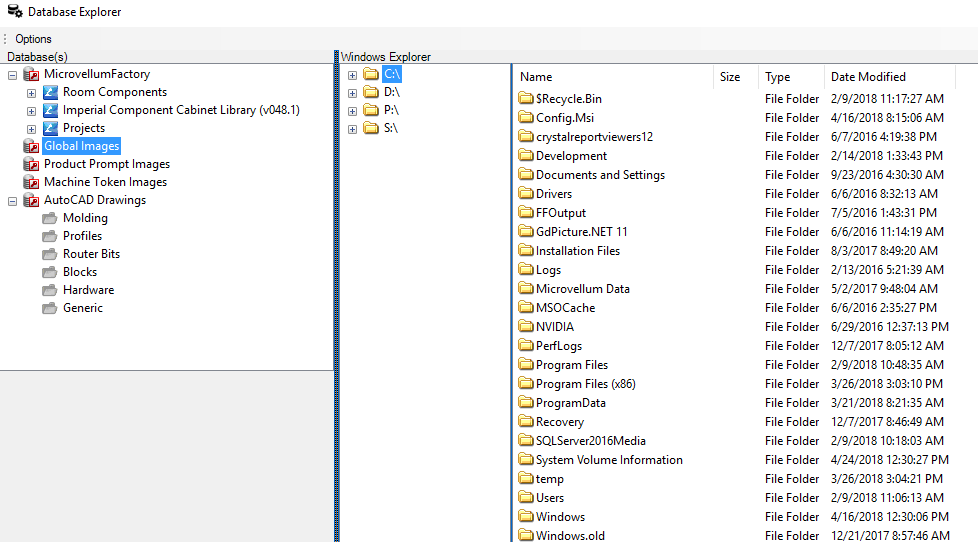
Use the Database Explorer to import and export files to and from the factory database. Database Explorer extracts individual library files to a folder on your computer or adds individual files on your computer to the database. Database Explorer is much more limited in its scope of operation than Database Management Utilities. It manages only data relating to the library, such as product and subassembly cut files, and the images associated with library data. The latter includes product static images, prompt images, room component images, machine token images, and AutoCAD images associated with various library components. Additional information on the Database Explorer can be found in the article Overview of Database Explorer.
Each library displays in a Windows Explorer type of interface so you can easily browse through the library, subassemblies, or specification group files.
Change Path to Microvellum Data
One of the configuration settings is the path on your computer where the Microvellum data is located. Use this button to change the location to that data folder. This path controls the job file location, work order's location, and the factory database used if using SQL Compact Edition.
Library Designer Paths
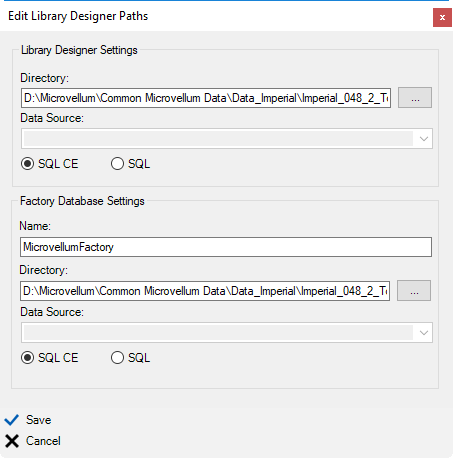
Setup the location of the library designer database and what factory database it will populate when you commit changes from the library designer database.
Transfer Tables
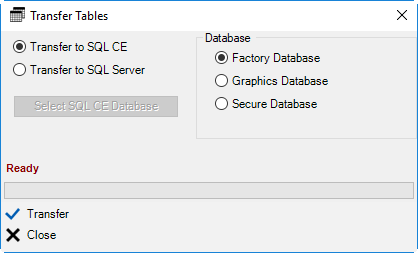
When using an SQL Server database type to connect to a database, the Transfer Tables button will be activated. This transfers all data from an SQL CE database into an SQL Server or takes all the data in an SQL Server and transfers it to an SQL CE database. If you are transferring data to the SQL Server, it will overwrite all existing data currently stored on the SQL Server. Exercise caution when using this command.